

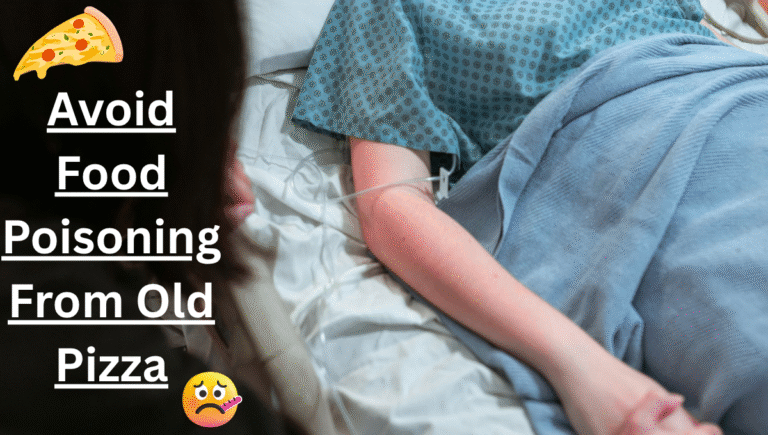

pizza is one of the most popular foods in america and around the world, Because it is easy to eat and can be saved and eaten again, but if pizza is not stored or heated properly, it can pose a huge food safety hazard.
But the good news is? that food poisoning from pizza can be completel prevented if ou control wo things. the most important are time and temperature
Here is a guide on how to stay safe
Why Old Pizza Can Cause Food Poisoning

Pizza contains multiple perishable ingredients:
- Cheese [moisture + fat]
- Meat toppings [pepperoni, sausage, chicken, beef]
- Tomato sauce
- Cooked vegetables
Opened pepperoni spoils faster than unopened packs, and ignoring storage times can lead to food poisoning—this guide explains the difference
If the temperature is not normal – meaning abnormal – then if the pizza is left on it, bacteria such as salmonella, listeria , E.coli is staphylococcus and other germs can grow
According to the U.S. Department of Agriculture and the Canadian Food Inspection Agency, perishable foods must not remain in unsafe temperature zones for extended period.
Common symptoms in food poisoning:
- Diarrhea
- Nausea
- Fever
- Vomiting
- Weakness or fatigue
- Stomach cramp
Wondering How long pizza can last in the fridge? Knowing the right storage time helps you avoid food poisoning and enjoy leftovers safely
People with weaker immune systems—children elderly individuals, and pragnent women are more vulnerable.
Why Pizza is a Food Poisoning Risk?
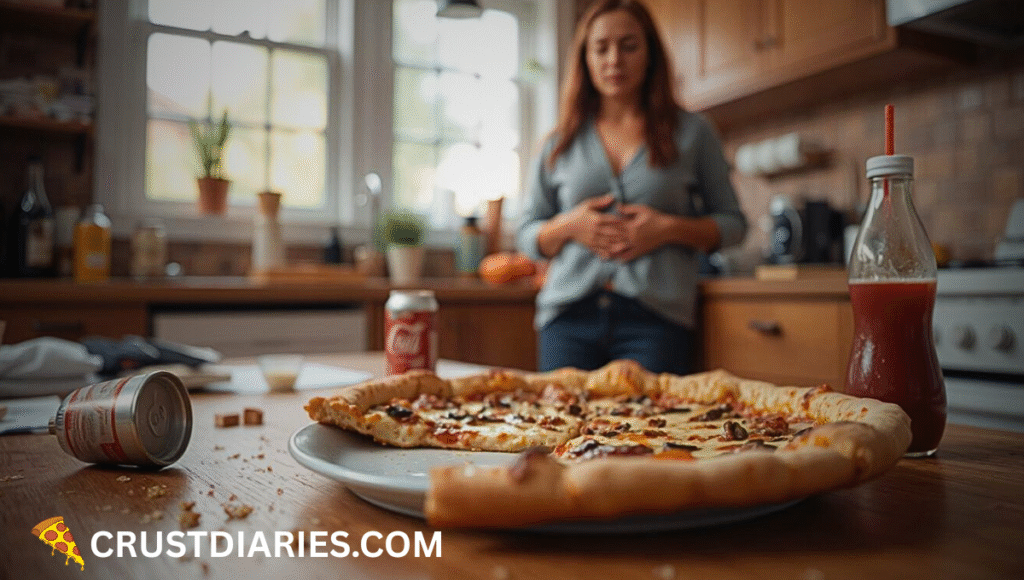
Pizza can carry multiple perishable ingredients that spoil quickly if mishandled:
Love Nando’s Peri Peri? This homemade Peri Peri pizza brings the same fiery flavor straight to your kitchen
- Meat (pepperoni, sausage, ground beef) → unsafe if left out too long
- Cooked vegetables & tomato sauce → retain moisture that supports bacterial growth
- Cheese → a mix of fat and moisture, creating a breeding ground for bacteria
If pizza is not stored or reheated following Canadian or U.S. food safety guidelines it can cause foodborne illness in anyone consuming it.
Is pizza really healthy or just a guilty pleasure? This complete guide breaks down its nutrition, benefits, and possible risks, To avoid food poisoning, You always follow the instructions on the packaging and make sure the pizza reaches the recommended internal temperature before eating
How Long Is Leftover Pizza Safe in the Fridge?
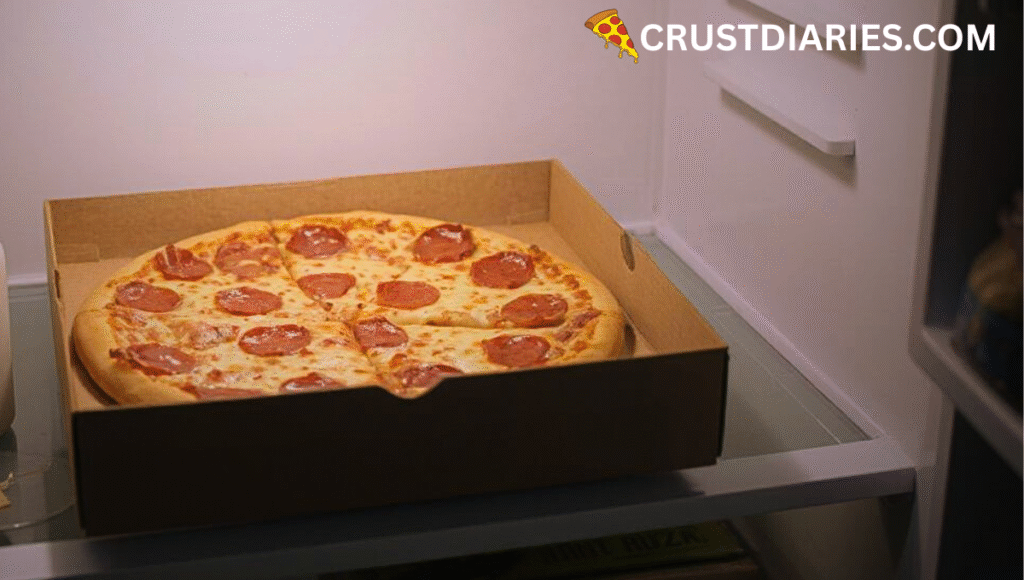
To prevent food poisoning:
- Refrigerate within 2 hours of cooking or delivery
- Store at 40°F (4°C) or below
- Keep in an airtight container
When stored properly, leftover pizza is safe for 3 to 4 days.
After day 4, the risk of bacterial growth increases significantly.
Salami or pepperoni? Learn the flavor differences and how improper storage can lead to food poisoning
Common Storage Mistakes That Cause Food Poisoning
Explore creative and delicious pizza ideas with a twist—from fusion toppings to unexpected flavor combos that take your pizza nights to the next level
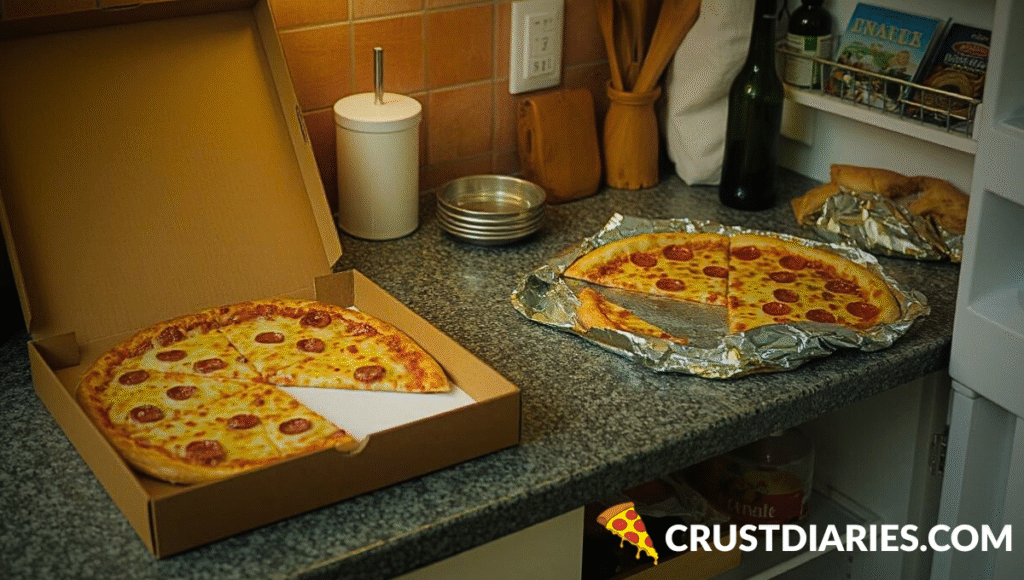
- Leaving pizza in the box overnight
- Storing slices uncovered
- Using a warm fridge
- Eating leftovers after 4 days
- Reheating without reaching safe temperature
How to Tell If Pizza Has Gone Bad

Do not eat pizza if you notice:
- Sour or unpleasant smell
- Slimy or sticky texture
- Visible mold [green, gray, or white spots]
- Color changes in cheese or toppings
- It’s older than 4 days in the fridge
Important: Cutting off mold does NOT make pizza safe
When in doubt, throw it out
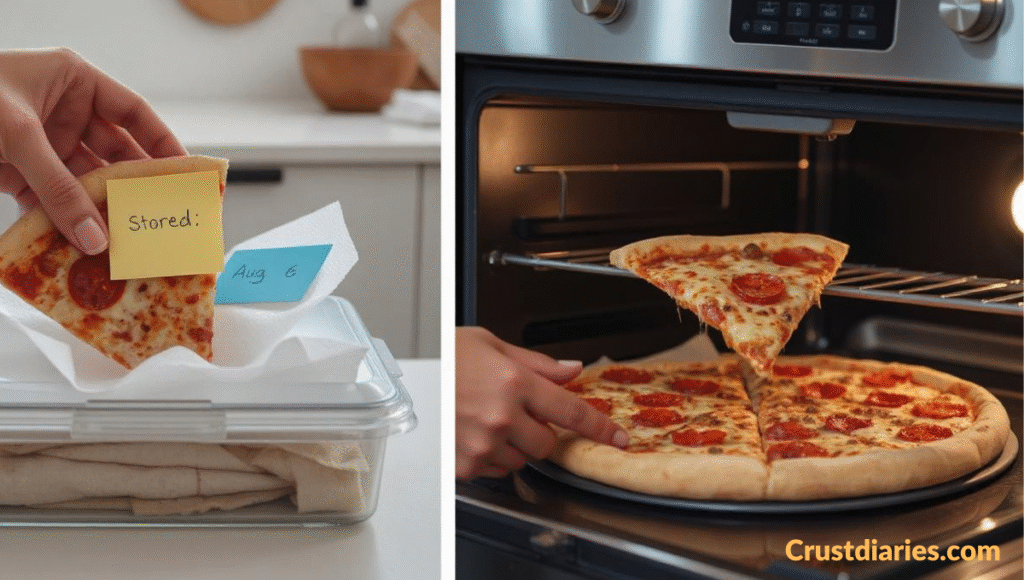
Best Practices to Store and Reheat Leftover Pizza Safely
1. Wash Your Hands
- Reduce bacterial contamination before eating.
2. Refrigerate Properly
- Within 2 hours of cooking or delivery.
3. Use an Airtight Containers
- Maintain freshness and safety.
4. Label and Track Dates
- Write the date on containers If pizza is older than 4 days throw it away.
5. Freeze If Needed
- Up to 2 months for long – term storage.
6.Reheat Safely
- Heat to 165°F [74°C] using a food thermometer to kill bacteria.
Kids and Family Pizza Safety
Children are specially vulnerable to foodborne illness because of their developing immune systems. always ensure leftover pizza for kids is:
- Properly refrigerated and reheated
- Stored separately in small airtight containers
- avoided if left out for more than 2 hours
Teaching children safe food habits early promotes lifelong hygiene awareness
Common Pizza Safety Myths
| Myth | Reality |
|---|---|
| Reheating pizza kills all germs | Some bacteria leave heat-resistant toxins behind |
| Vegetarian pizza can’t cause food poisoning | Cheese and sauce still support bacteria growth |
| Frozen pizza is always safe | Only if cooked to the correct temperature |
| Smelling pizza tells if it’s safe | Bacteria can grow without changing smell |
What to Do if You Suspect Food Poisoning
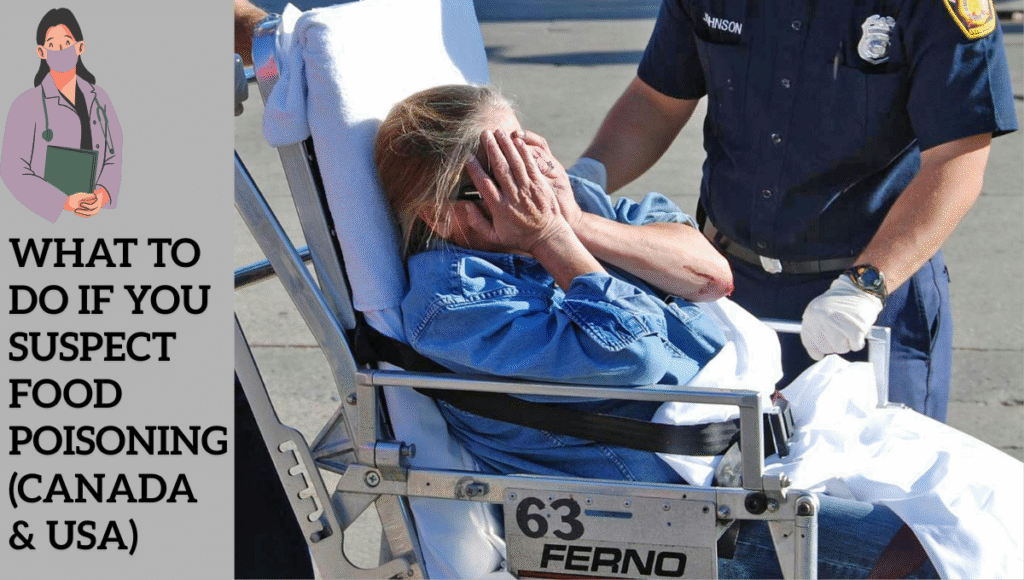
If you experience symptoms of food poisoning after eating pizza:
1-Stay hydrated:
- If you feel that you are having food poisoning first consult your doctor and as a precaution you can consume as much water broth or electrolyte solution as possible it may help you to stay hydrated
2-Rest:
- After poisoning you need as much rest as possible because rest will help your body recover quickly
3-Avoid anti-diarrheal medications:
- Avoid taking various types of medications without consulting a doctor
4-See a doctor:
- Seek medical help in Canada or the USA if symptoms include:
- High fever
- Blood in stool
- Persistent vomiting
- Dehydration signs
Report serious cases to local health authorities in Canada or the CDC in the U.S.
Expert Insight:
Leftover pizza can be perfectly safe if handled properly. The two key factors are time and temperature refrigerate within 2 hours and reheat to 165°F.
Dr. Amanda Lewis, Food Safety Specialist (USDA FSIS)
🌍 Global Food Safety Guidelines
| Country | Max Fridge Storage | Reheat Temp |
|---|---|---|
| USA (USDA) | 3–4 days | 165°F |
| Canada (CFIA) | 3–4 days | 74°C |
| UK (FSA) | 2–3 days | “Piping hot” |
| Australia (FSANZ) | 3 days | 75°C |
| Europe (EFSA) | 2–3 days | 70°C minimum |
Global agencies agree: prevent temperature abuse, avoid cross-contamination, and refrigerate within 2 hours.
Global Food Safety Standards
- Europe (EFSA): Emphasizes preventing temperature abuse and cross-contamination.
- Canada (CFIA): Refrigerate perishable foods within 2 hours; store at 4°C or below.
- USA (USDA FSIS): Avoid the “danger zone” between 40°F and 140°F; reheat to 165°F.
- UK (FSA): Follow Use-by and Best-before labels strictly for food safety.
Final Thoughts: Enjoy Pizza Safely
Pizza is a delicious and convenient food, but safe handling, storage, and reheating are essential to prevent foodborne illness.
Pizza Safety Myths (Quick Facts)
Myth: Reheating always makes old pizza safe.
Fact: Some bacteria produce toxins that heat cannot destroy.
Myth: Vegetarian pizza can’t cause food poisoning.
Fact: Cheese and sauce still support bacterial growth.
Myth: You can always smell when pizza is bad.
Fact: Some harmful bacteria don’t change smell or taste.
🍕 FAQs: Safe Leftover Pizza & Food Poisoning Prevention (USA & Canada)
1. How long can leftover pizza stay in the fridge?
When stored properly in an airtight container, leftover pizza stays safe for 3 – 4 days
2. Is it safe to eat pizza left out overnight?
No. Pizza left at room temperature for more than 2 hours should be thrown away
3. How can you tell if pizza has gone bad?
Signs include a sour smell, visible mold, slimy texture, or off taste
4. Does reheating make old pizza safe to eat?
No. Reheating kills some bacteria but cannot remove harmful toxins already present
5. What’s the best way to store leftover pizza?
Seal slices tightly in an airtight container or wrap them well before refrigerating
6. Can you freeze leftover pizza safely?
Yes. Frozen pizza keeps best quality for 1–2 months when wrapped properly
7. What happens if you eat spoiled pizza?
Eating bad pizza may lead to stomach cramps, nausea, vomiting, or diarrhea



Pingback: 🧊🍕How long can pizza last in the fridge? - crustdiaries pi
Pingback: Pizza with a Twist: 6 Creative & Delicious Pizza Ideas You Must Try
Pingback: Pizza Storage Mistakes That Can Make You Sick – And How to Avoid Them - Crustdiaries
Pingback: Peri Peri Pizza | Homemade & Nando’s Style Spicy Pizza
Pingback: How Long Does Defrosted Chicken Last In The Fridge?
Pingback: What the Best Oil to Fry Chicken In? [Top 5 Oils + Pro Tips]
Pingback: Can You Sue for Food Poisoning? What the USA Law Says?
Pingback: What Are Night Oats & Their Benefits: Nutrition & Health
Pingback: Wood Fired Pizza in the USA: Restaurants, Ovens, Menus - Crustdiaries
Pingback: How to Properly Clean and Maintain Your Pizza Stone?
Pingback: Low Calorie Pizza Crust: Healthy & Guilt-Free Pizza Recipes