

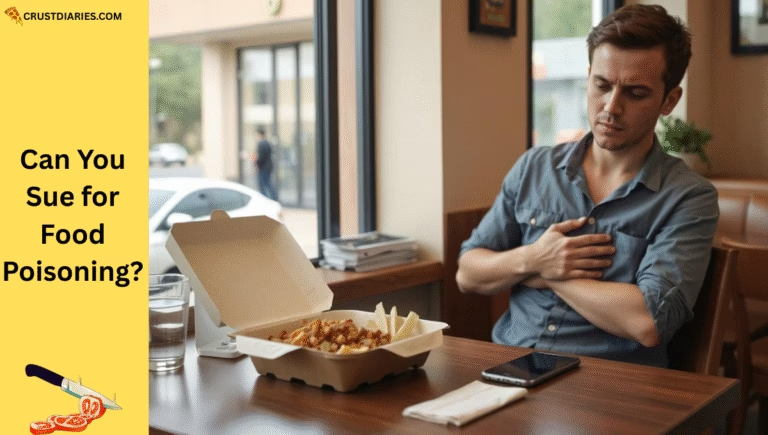

Food poisoning is one of those experiences you never forget. One moment you are enjoying a meal, and a few hours later you are dealing with nausea, vomiting, stomach cramps, or worse. Most cases are mild and go away on their own, but some can lead to hospitalization, long-term complications, or major financial losses. When that happens, may people ask the same question:
Can i sue for food poisoning?
The short answer is yes-you can,but the process is not always straight forward. In the united states, Food safety laws and personal injury rules give consumers the right to take legal action when contaminated food causes harm. Whether your illness came from a restaurant, grocery store, food delivery app, or packaged product, you may be able to hold someone legally responsible
This article breaks down everything you need to know – in a friendly easy – to – understand way – so you can decide whether pursuing a claim makes sense for your situation
What Counts as Food Poisoning Under U.S. Law?

Food poisoning happens when a person becomes sick after consuming contaminated food or beverages. That contamination can come from:
- Bacteria [ Salmonella, E. Coli, Listeria, Campylobacter ]
- Viruses [ e.g.. Norovirus ]
- Parasites
- Toxins or Chemicals
- Foreign objects [ Glass, insects, metal shaving ]
In the legal world, this falls under Foodborne illness. If it can be proven that you got sick because a business failed to prepare, store, or serve food safety, the law may hold that business liable
Can You Really Sue for Food Poisoning?
Yes – you can absolutely can sue for food poisoning in the U.S. The bigger question is whether you should
A lawsuit often depends on:
Evidence
- You must show that a specific food item – and a specific provider – caused your illness
Severity
- If you had mild symptoms and recovered in a day, your damages may be to small to justify a lawsuit
Financial or physical harm
- Medical bills, lost wages, long – term health issues or hospitalization strengthen your claim
Traceability
- If multiple people got sick from the same place, it becomes easier to prove negligence
Who Can Be Sued for Food Poisoning?
Food safety involves a large chain, and liability can fall on any party involved in producing or serving the contaminated food. Depending on the case, you may sue:
- Restaurants or cafes
- Caterers
- Food trucks and street vendors
- Grocery stores
- Meal delivery companies
- Food manufacturers or processors
- Farmers or suppliers
- Hotels or cruise lnes
- Schools or institutions
Sometimes more than one party is responsible, especially if contamination happened before the food reached the restaurant
What You Need to Prove in a Food Poisoning Lawsuit

To win a food poisoning case, you usually need to show:
The food was contaminated
- This might be supported by lab tests, health department findings or multiple consumer complaints
The contamination caused your illness
- Medicl records, stool tests, and a doctor’s diagnosis help build this connection
You suffered real damages
- This includes financial losses [ medical bills, lost wages ] and non-economic harms [pain, suffering, emotional distress]
The defendant was negligent OR violated food safety laws
Examples include:
- Improper storage temperatures
- Poor hygiene
- Cross-contamination
- Expired food
- Undercooked meat or eggs
- You don’t need to prove intent – only that someone failed to act reasonably or follow standards
Types of Legal Claims You Can File
Food poisoning cases usually fall under one or more legal theories:
Negligence
- The business didn’t take reasonable steps to keep food safe
Strict Product Liability
- Even without proving negligence, the manufacturer or seller may be liable if the product was defective or contaminated
Breach of Warranty
- Food must be safe for consumption – if it wsn’t the business violated that implied guarantee
Wrongful Death
- In rare cases where food poisoning leads to death, families can file a wrongful death lawsuit
- Your attorney will choose the best legal route based on your situation
How Much Can You Sue For?
Food poisoning settlements can vary widely. Some cases resolve for a few thousand dollars while severe or high profile outbreaks have resulted in six or even seven-figure settlements.
The compensation amount usually depends on:
- Medical bills [ ER visits, tests, hospitliztion ]
- Lost wages or time off work
- Pain and suffering
- Long-term complictions [ like kidney damge from E coli ]
- Emotionl distress
- Loss of enjoyment of life
- Permnent disbility [ rare but possible ]
- Wrongful death damages [ if aapplicable ]
When multiple people are affected, such as during a restaurant outbreak, claims can be stronger and may be handled as group or class-action lawsuits.
When You Should Consider Suing
Not all food poisoning cases require a lawsuit. Here are situations where legal action makes sense:
You were hospitalized or needed medical treatment
- This automatically increases the seriousness of your case
- You missed work or lost income
- Others who ate the same food also got sick
This makes your case for easier to prove
- You can identify the exact meal or product that made you sick
- A recalled product matches what you consumed
- Your doctor confirmed a foodborne pathogen
- The business has a history of food safety violations
How to Strengthen Your Case
If you suspect food poisoning, here’s what to do:
Seek medical attention immediately
- Tell your doctor what you ate and where
Get diagnostic tests
- Lab tests make your claim much stronger
Report the incident to the local health department
- They may investigate and confirm a wider problem.
Save receipts, leftovers, or packaging
Document everything
- Symptoms, timelines, hospital records, and bills.
Contact an attorney early
- Most food poisoning lawyers offer free consultations, and many work on contingency — meaning you pay nothing unless you win
What a Lawyer Can Do for You
Foodborne illness cases can be complex, especially when multiple parties are involved. A lawyer can:
- Help identify exactly who is liable
- Gather evidence
- Work with medical experts
- Handle negotiations
- Determine the value of your damages
- Represent you in court if necessary
Because businesses and insurance companies often deny responsibility, having legal help can make a major difference
Is a Lawsuit Always Necessary?
Not always. Many food poisoning claims settle out of court through:
- Insurance negotiations
- direct settlemets
- Restaurant or company compensation programs
- Product liability claims
You might not need to file a lawsuit if the company agrees to pay for your losses
However if they deny responsibility or minimize your damages, a lawsuit becomes more likely
How Long Do You Have to File a Claim? (Statute of Limitations)
Every state in the U.S has its own deadline for filing a personal injury claim, usually:
1 to 3 years from the date of the illness
If you miss the deadline, you lsoe right to sue. Because food poisoning cases rely on evidence that can fade quickly, it’s best to take action early
Common Myths About Food Poisoning Lawsuits
1: You can’t sue if you didn’t keep the receipt
- Not true – while a receipt helps, other evidence can still support your case
2: You must prove exactly which bacteria caused your illness
- Helpful, yes – require, no
3: Food poisoning cases aren’t worth anything
- Some cases result in significant compensation, especially with severe symptoms
4: Restaurants always win these cases
- If negligence is clear, businesses often settle rather than risk trial. Common Myths about food poisoning Lawsuit
Final Thoughts: When Justice Makes Sense
Food poisoning can be more than just an unpleasant experience – it can disrupt your life, your finances, and your health. The U.S legal system protects consumers, and if you have been seriously harmed by contaminated food, you deserve accountability and fair compensation
A lawsuit isn’t always necessary, but knowing your rights helps you make an informed decision. Whether it’s a careless restaurant a negligent manufacturer, or a contaminated product, you don’t have to deal with the consequences alone.
If your illness was serious, costly, or clearly linked to a specific food sauce, consulting a lawyer is a mart first step


Pingback: Leftover Pizza Safety:Prevent Food Poisoning[USA & Canada]
Pingback: Is Pizza Healthy? Discover The Truth According To Doctors
Pingback: How to Make Coffee Without a Coffee Maker- Easy DIY Ways